What Is Enterprise Project Management?

What Is Enterprise Project Management?

Large enterprise organizations typically run multiple complex projects simultaneously. Although these projects do not necessarily seem connected, they all impact the same enterprise organization. Enterprise project management (EPM) refers to the practice of managing projects on a companywide scale. It generally involves implementing strategies and processes to streamline and improve the effectiveness of project management on a large scale. According to the Project Management Institute (PMI), these initiatives can include:
- Using project management software to consolidate multiple projects and make them more visible and trackable across the organization
- Creating a project management department
- Using “stages of growth” models to improve project-management capabilities
When discussing enterprise project management software, it is essential that they offer specific enterprise-level solutions. They should not only manage a portfolio of initiatives effectively but also facilitate collaboration among teams and departments.
Elevate your business operations with Wrike
What makes enterprise project management different?
Traditional project management practices focus on seeing one specific project through with a defined, measurable objective.
Enterprise project management focuses on the organization, prioritizing and highlighting its business goals and managing and grouping projects to ensure they meet those broader company objectives.
The end objective is not necessarily a completed project but a project that effectively provides value to the organization.
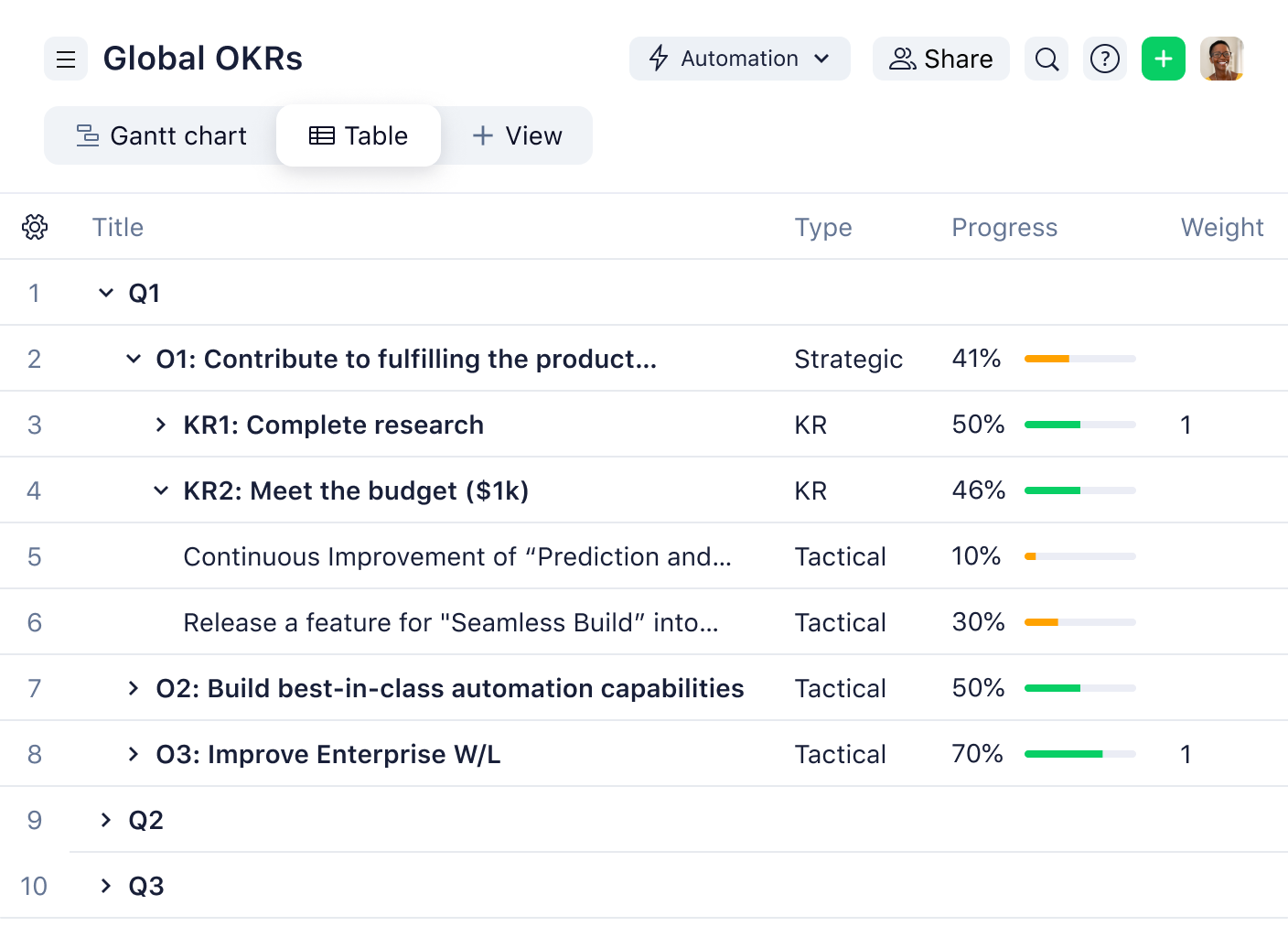
Utilizing an Enterprise project management tool to align projects with the company's OKRs will aid in maintaining focus across all teams and departments.

Benefits of enterprise project management
Although roughly 25% of the gross domestic product of developed nations is spent on or through projects, there is often a lack of alignment among projects within an organization. This divide can result in duplication, wasted effort, missed opportunities, inconsistent decision-making, and other hurdles. Organizations, and project managers within the company, need to ensure all projects are strategically focused on their overarching business objectives.
Enterprise project management aims to do just that. As Villanova University explains, EPM practices can “identify when projects conflict or duplicate efforts, and they can recognize underfunded projects that might present an opportunity for the organization.” The university cites a potential 20% increase in profits for organizations that employ an EPM system.
The PMI outlines additional benefits of enterprise project management, including:
- Higher-quality output
- Improved productivity
- Reduced impact of skills shortage
- Reduced project risks
- Enhanced reliability of delivery
Implementation of enterprise project management
Since enterprise project management focuses on the organization’s core mission and strategic objectives, implementation of an EPM system begins with a thorough look at the company’s existing projects and organizational culture. After all, EPM will require adaptability and openness to change.
It is vital to include stakeholders in an EPM system since the end goal is full transparency, wider participation, more project visibility, and increased monitoring. A high level of communication is essential to bring everyone on board and ensure goals and efforts are aligned.
Project manager salaries vary by industry, location, experience, and certifications. On average, IT project managers earn $146,000, construction managers $95,000, and architectural/engineering managers $144,000 annually. PMP-certified professionals typically earn more, ranging from $75,000 for general project managers to over $116,000 for senior IT project managers, reflecting the value of certification and expertise.
Project managers are needed across nearly all industries and company sizes, as they plan, budget, and oversee projects. They are especially in demand in healthcare, construction, and IT, where managing complex projects and coordinating teams is critical. Essentially, organizations rely on project managers to execute projects efficiently and achieve strategic objectives.
Construction project managers earn an average of about $74,923 per year, with salaries varying by experience and location. Entry-level managers make $52–62k, while those with 10–20 years earn around $84k. High-demand cities like San Francisco, New York, and Los Angeles offer higher pay, whereas cities such as Atlanta and Charlotte are slightly below the national average.
IT project managers earn an average of $88,982 per year, with salaries varying by experience, location, and certifications. Entry-level PMs make $61–72k, while those with 10–20 years can earn over $103k. High-demand cities like San Francisco, New York, and Boston may offer up to 20% above average, whereas Seattle and Austin typically pay slightly less.
Beginners interested in project management can study through a variety of online, self-paced courses that fit around work or personal schedules. When choosing a program, look for courses offered by Project Management Institute (PMI) Registered Education Providers, ensuring the training meets industry standards. Also consider the instructor’s experience, course content, and whether the program includes practical, real-world applications.