What is BAC (Budget at Completion) in Project Management?

What is BAC (Budget at Completion) in Project Management?

Budget at Completion (BAC) is a measure that is often used in earned value management to track the actual cost of a project against its forecasted budget. It is calculated at the start of a project based on the project work and its individual components.
The PMBOK defines BAC as “the sum of all budgets established for the work to be performed.” In simple terms, the BAC is the total budget that has been estimated for all the work that needs to be completed over the project’s duration.
It can be used alongside the Planned Value (PV) metric to determine whether the project’s budget is on track based on a specific point in its lifecycle. For example, if the project’s BAC is $120,000 and it is 20% of the way done, you would calculate Planned Value by multiplying $120,000 x 20% = $24,000.
BAC project management example
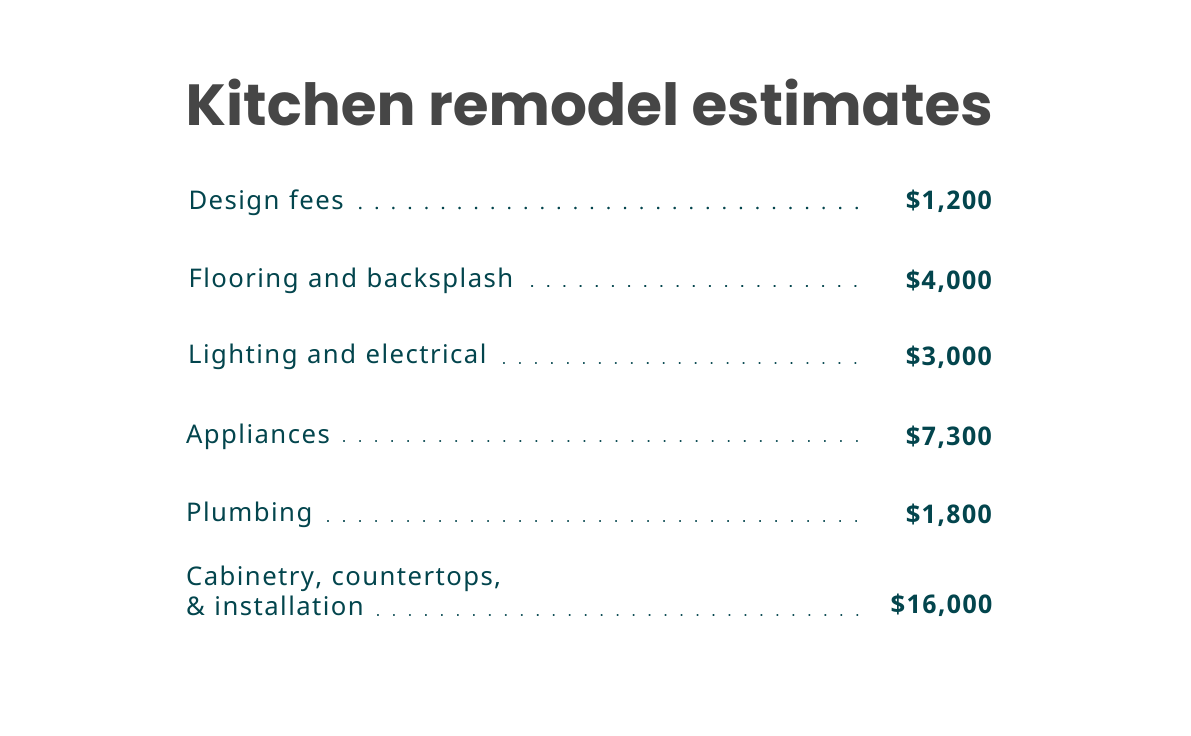
Let’s say you’re planning to project manage a basic eight-week long kitchen remodel. You have a rough idea of the costs associated with this remodel because you’ve completed similar projects in the past. Here is a breakdown of the project’s costs.

How to determine Budget at Completion (BAC)
Because BAC is the sum of all budgets within the project, it is only logical that there is a method of arriving at these figures. Different techniques for determining Budget at Completion include expert judgment, parametric judgment, analogous estimation.
Parametric estimation
As PMI explains, parametric estimation “uses a statistical relationship between historical data and other variables” to arrive at accurate estimates of budget, cost, and project length.
Expert judgment
Expert judgment is exactly what it sounds like. To create a project budget estimate using this method, consult experts and professionals familiar with the nature of your project, its limitations, and its various components and costs.
Analogous estimation
Analogous estimation arrives at a project budget estimate based on experience with another, similar project. For example, your company recently completed an educational gaming app within six months at a budget of $180,000.
Now, you’ve been approached by another company that wants to make a similar app in a similar timeframe. Analogous estimation would then assume that such a project could be completed in a similar amount of time — though other variables may arise and this may not always be the case.
Change management in project management is the structured use of tools, processes, and leadership to manage how changes affect projects, teams, and stakeholders. It combines overseeing project work with supporting people through transitions, ensuring changes are understood, accepted, and adopted while minimizing disruption and helping projects achieve their intended goals successfully.
A cost-benefit analysis in project management compares a project’s expected benefits to its total costs to determine whether it’s worth pursuing. It gives teams a clear, data-backed view of a project’s financial viability by quantifying costs, forecasting benefits, and calculating metrics like ROI and NPV. This helps decision makers prioritize initiatives and allocate resources with confidence.
Cost control in project management is the process of monitoring and managing project expenses to make sure the work stays within budget. It includes tracking spending, planning for financial risks, and preparing for potential setbacks that could drive unexpected costs. Effective cost control helps teams avoid overruns, stay on schedule, and use resources more efficiently.
Cost management in project management requires estimating, budgeting, and controlling project expenses so that the work can stay financially on track. Teams can predict future costs, monitor spending throughout the project lifecycle, and compare planned versus actual costs to improve future budgeting. Effective cost management helps prevent overruns, reduce risk, and support better resource planning and long-term profitability.
Cost variance is a measure of a project’s financial performance that compares the budgeted cost of work performed (BCWP) with the actual cost of work performed (ACWP). It shows whether a project is over or under budget, helping teams track spending as the project progresses. A variance close to zero is ideal, though difficult to achieve in practice.