What Is an Activity in Project Management?

What Is an Activity in Project Management?

If you have spent any time creating or following a project management plan, you’ve heard the term “activity” used many times.
An activity is typically one stage of a project management plan. Each activity consists of one or more actions that, upon completion, will lead to the next project stage. Taken together as a series, the activities will result in the final deliverable. Each activity has a defined start and end, as well as a deadline or time period within which it must be completed.
When you are planning a project, one of the key steps is to define the activities required to bring that project to fruition. This generally involves creating an activity list, which is exactly what it sounds like — a list of all the actions required for the project. For example, let’s say you are planning a large event. Some activities that might be involved include:
- Mailing invitations
- Booking the venue
- Hiring a caterer
Each activity will likely consist of several sub-tasks; sending out the invitations, for example, will require gathering and confirming attendees’ addresses, printing the invitations and envelopes, and then mailing the completed invitations. Booking a venue will require site visits, RFPs, price negotiation, signing a contract, and so on.
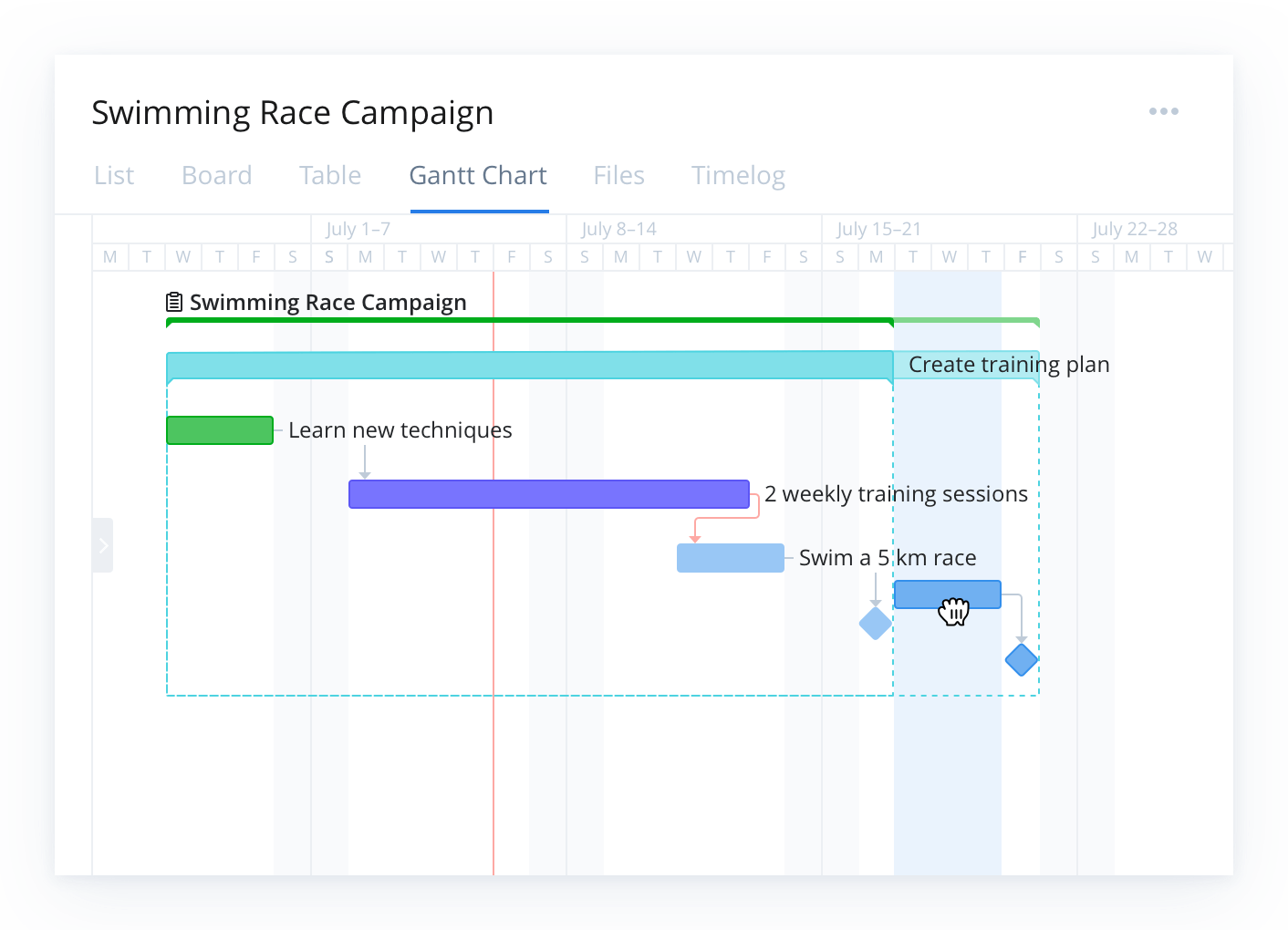
Once the activities have been defined, it’s up to the project manager and other stakeholders to sequence them — in other words, to place them in the appropriate order, and then track and manage them. Activities are typically tracked with either a network diagram, representing all the activities for a project in a sequential, workflow format or a Gantt chart, which represents tasks via horizontal bars that demonstrate their length and duration.
Example of a Gantt chart:

Many modern project management software solutions blend elements of Gantt charts with network diagrams to produce a robust tracking document that visually represents a project’s activities, dependencies (which activities are connected to others), and workflow.
Further reading:
- Building Visibility in a Global Marketing Team
- Critical Path Method in Project Management Is as Easy as 1, 2, 3
- How 5 PM Experts Create a Fail-Safe Project Management Plan
In project management, deliverables are tangible outputs produced through objective-focused work within a project’s scope. They can be internal or external and are usually due on specific dates. Unlike objectives or milestones, deliverables are concrete items that must be completed and handed over to advance or close a project.
Governance in project management is the framework that defines accountability, decision-making authority, and reporting relationships within a project. It establishes who oversees the project, who makes key decisions, and how information flows between stakeholders. Effective governance provides structure, oversight, and alignment, with the project sponsor playing a critical coordinating role.
PMBOK, or the Project Management Body of Knowledge, is a comprehensive framework of standardized processes, best practices, terminology, and guidelines for project management. Maintained by the Project Management Institute (PMI), it helps organizations standardize and tailor their project practices while reducing the risk of failure.
A PMO, or project management office, is a centralized team or function that standardizes project management processes across an organization. It provides governance, best practices, tools, and oversight to improve efficiency and consistency. By aligning projects with business objectives, a PMO helps organizations deliver initiatives on time, within budget, and with greater strategic impact.
A project in project management is a temporary effort made up of specific tasks designed to achieve a clearly defined goal or outcome. It can be simple or highly complex, and responsibilities are usually assigned by a manager who outlines expectations and deadlines. Teams often break projects into smaller tasks to improve accountability, streamline workflow, and ensure timely completion.