Wrike logo.
    • For teams

      • Marketing

        Streamline proofing and reporting for seamless campaigns.

      • Creative & Design

        Create high-quality assets and get them approved in record time.

      • Product

        Accelerate your product process, from idea to delivery.

      • Client Services

        Exceed clients’ expectations with expert resources.

      • PMO

        Align strategy with execution and deliver results.

      • IT

        Execute initiatives, optimize workflows, and automate requests.

      • Operations

        Make work flow seamlessly with intuitive management tools.

      • HR

        Manage teams effortlessly with customizable HR features.

      • Legal

        Organize every file, case, and due date in one secure space.

      • Finance

        Centralize all financial tasks, from budgeting to invoicing.

      • See all teams

    • Workflows

      • Campaign Management

        Make marketing magic with end-to-end campaign management.

      • Agency Management

        Take full control of your agency management processes.

      • Client Service Delivery

        Get ahead of the competition with faster client services.

      • Product Lifecycle

        Watch your product lifecycle flow, from concept to customer.

      • Project Portfolio Management

        Manage your complete portfolio, from strategy to results.

      • Creative Production & Content

        Create, collaborate, proof, and approve all in one place.

      • Workflow Management

        Use custom statuses and automate your team workflows.

      • Project Management

        Plan Agile projects, track deadlines, and deliver results.

      • See all workflows

    • For industries

      • Technology

        Build solutions that matter, and deliver faster.

      • Manufacturing

        Enhance operations, accelerate production, and empower teams.

      • Professional Services

        Organize clients, streamline projects, and automate workflows.

      • Finance

        Deliver better, faster financials with automations.

      • Healthcare

        Collaborate cross-functionally in a secure setting.

      • Education

        Unite multiple disparate teams, departments, and colleges.

      • Construction

        Streamline building projects, from scoping to invoicing.

      • Media & Entertainment

        Choose one powerful platform for fast-paced work.

      • See all industries

    • Explore Wrike

      • Take a Product Tour

      • Book a Demo

      • ROI Calculator

      • Customer Stories

      • Start with Templates

    • Features

      • Dashboards

        Fuel better, faster, data-driven decisions with powerful analytics.

      • AI

        Learn about powerful AI and automations with Work Intelligence®.

      • Wrike Whiteboard

        Turn inspiration into execution with powerful visualization tools.

      • Gantt Charts

        Interactive project scheduling across teams.

      • Automation

        Define and trigger automated workflows to eliminate manual efforts.

      • Proofing

        Streamlined proofing and collaboration in one place.

      • Project Resource Planning

        Plan and allocate resources for timely delivery.

      • Project Views

        Get the full picture with customizable, intuitive project views.

      • Kanban Boards

        Instantly view project progress and create customized workflows.

      • Dynamic Request Forms

        Custom forms powered by conditional logic.

      • Approvals

        Keep approvers in the loop from start to finish.

      • Custom Item Types

        Tailor work items to fit your specific workplace.

      • See all features

    • Platform

      • Book a Demo

      • Start with Templates

      • Wrike AI

      • Integrations

      • Security

      • Mobile & Desktop Apps

    • Workflow-Powered Collaboration

      Sync with multiple teams to keep work flowing across your organization.

    • Industry-Leading Security

      We're dedicated to safeguarding data beyond industry standards and ensuring secure collaboration.

    • Pioneering AI and Innovation

      Put the power of data and AI to work for your organization.

    • Invested in Customer Success

      We support customers at every step of their journey from pre-sales to onboarding with 24/7 support.

    • Boundless Configuration

      Customize your workspace to suit the unique needs of every team in your organization.

    • Effortless Scalability

      Add new teams or adjust to rapid growth seamlessly with Wrike’s scalable platform.

    Why Wrike beats the competition

    Find out why 20,000+ of the world’s top companies choose Wrike to manage their workflows

    View comparison
    • Go deeper

      • Resource Hub

        Top assets on productivity, collaboration, and more.

      • Wrike Blog

        Latest news and best practices on project management.

      • Educational Guides

        Guides and tools to unlock better work management.

      • Webinars

        Join our live or on-demand sessions to do your best work.

      • Customer Stories

        Explore Wrike’s case studies for key insights on customer success.

      • Developers

        Connect and build integrations with easy-to-use APIs.

    • Upskill and Connect

      • Training & Certifications

      • Help Center

      • Wrike's Community

      • Premium Support Packages

      • Wrike Professional Services

      • Partners

    Discover our ‘Age of Connected Intelligence’ research

    It’s time to stop experimenting with AI tools, and start excelling with connected intelligence.

    Read more
  • Enterprise
  • Pricing
Contact Sales
    Language selector dropdown with globe icon and list of available languages.
    English
    Dansk
    Deutsch
    Español
    Français
    Bahasa Indonesia
    Italiano
    Bahasa Melayu
    Nederlands
    Norsk
    Polski
    Português (BR)
    Svenska
    Русский
    日本語
    한국어
    中文 (简体)
    中文 (繁體)
Log in
Wrike logo.
Wrike logo.
  • Guide overview
    • Sprint Backlog: What Is It, How to Use It, and Best Practices
      • Scrum At Scale
      • Scrum Concepts
      • Scrum Meetings
      • Scrum Planning
      • Sprint Review
      • Training And Certification
    • What Are the 3 Artifacts of Scrum?
      • A little background on Scrum
      • Other commonly used Scrum artifacts
      • Tips for managing Scrum artifacts
      • From framework to action: Manage Scrum artifacts with Wrike
    • What Is Scrum?
      • What are the three pillars of Scrum?
      • What is a Scrum master?
      • What techniques can Scrum masters use?
      • Scrum vs. Agile: Differences and similarities
    • Scrum Methodology
      • What is Scrum methodology?
      • When was Scrum methodology introduced?
      • When to use Scrum methodology
      • Agile vs. Scrum
      • Why Scrum is used for complex projects
      • Scrum principles and values
      • Scrum roles and responsibilities
      • Scrum events (ceremonies)
      • Scrum artifacts
      • How does Scrum methodology work?
      • Benefits of Scrum
      • Challenges of Scrum
      • Example of Scrum methodology
      • Want a quick starter kit for your team?
      • Use Scrum with Wrike
    • Scrum Meeting
      • What is a Scrum meeting?
      • Types of Scrum meetings
      • How to run a Scrum meeting
      • Scrum meeting vs. standup
      • Common mistakes in Scrum meetings
      • Wrike use cases for Scrum meetings
      • Keep every sprint on track
    • Guide to Scrum Sprints
      • What is a Scrum sprint?
      • How many sprints are in a Scrum project?
      • What to do before a Scrum sprint?
      • Importance of Scrum sprints
    • Sprint Planning
      • What is sprint planning?
      • Why is sprint planning important?
      • Who attends the sprint planning?
      • When sprint planning happens
      • How to run a sprint planning meeting? (A step-by-step flow)
      • Key inputs and outputs
      • Best practices and tips
      • Common pitfalls
      • Tools and templates
    • The Complete Guide to Scrum Ceremonies
      • What are Scrum ceremonies?
      • What are the five ceremonies of Scrum?
      • How to run a Scrum meeting
      • Why are Scrum ceremonies beneficial to projects?
      • Common mistakes in Scrum ceremonies (and how to avoid them)
      • Scrum ceremonies in remote and hybrid teams
      • How do you get your team excited for Scrum rituals?
      • How to organize your Scrum rituals with Wrike
    • The Ultimate Guide to Sprint Retrospectives
      • What is a sprint retrospective?
      • What is the difference between sprint review and sprint retrospective?
      • What is a sprint retrospective meeting?
      • What happens in a sprint retrospective meeting?
      • What are the benefits of sprint retrospective meetings?
      • How long is a sprint retrospective meeting?
      • When should a sprint retrospective meeting be held?
      • Who runs sprint retrospective meetings?
      • What questions should be asked in a sprint retrospective meeting?
      • What is the mad sad glad retrospective?
      • What are the benefits of a mad sad glad retrospective?
      • How to run a mad sad glad retrospective
      • Mad sad glad retrospective examples
      • What are the outcomes of a mad sad glad retrospective?
      • Plan your next sprint retrospective with Wrike
    • Daily Scrum
      • What is a daily Scrum?
      • Daily Scrum vs. daily standup
      • Daily Scrum agenda (15-minute playbook)
      • Remote and asynchronous daily Scrum
      • Benefits of the daily Scrum
      • Common anti-patterns (and fixes in Wrike)
      • Daily Scrum examples by team type
      • How Wrike supports the daily Scrum
    • Scrum of Scrums Meeting
      • What is the Scrum of Scrums meeting?
      • Scrum of Scrums diagram
      • Scrum of Scrums diagram
      • How often should the Scrum of Scrums meeting be held?
      • Purpose of Scrum of Scrums meeting
      • Benefits of Scrum of Scrums
      • Who participates in Scrum of Scrums meetings?
      • Scrum of Scrums agenda
      • Scrum of Scrums best practices
      • Using Wrike as your Scrum of Scrums Agile planning software
    • Introduction to Scrum Team and Roles
      • What are the three Scrum roles?
    • What Is a Scrum Product Owner?
      • Scrum product owner responsibilities
      • Product owner vs. product manager - What are the main differences?
      • Characteristics of a product owner
    • What Is a Scrum Master?
      • What is a Scrum master? 
      • The role of a Scrum master 
      • Scrum master responsibilities
      • Scrum master skills
      • What are the benefits of being a Scrum master?
      • What are the challenges of being a Scrum master? 
      • What’s the difference between a Scrum master and a project manager?
      • What is a Scrum master certification?
    • Scrum Project Management Software
      • What to look for in Scrum project management software
      • 1. Ease of use
      • 2. Industry fit
      • 3. Agile task management 
      • 4. External sharing 
      • 5. Detailed reporting
      • Wrike: The best software for Scrum project management 
      • Best practices for Scrum management
    • A Complete Guide to Scrum Boards
      • What is a Scrum board?
      • How do Scrum boards work?
      • Purpose of a Scrum board
    • Scrum Glossary
    • FAQs
      • Scrum At Scale
      • Scrum Concepts
      • Scrum Meetings
      • Scrum Planning
      • Sprint Review
      • Training And Certification
    1. Scrum Guide
    2. FAQ
    3. Scrum Concepts

    What Is Scrum Velocity?

    11 min readLAST UPDATED ON DEC 5, 2025
    Alex Zhezherau
    Alex Zhezherau Product Director, Wrike

    What Is Velocity in Scrum?

    Velocity is a key Scrum metric that measures the amount of work a team can deliver during a sprint. Before explaining how velocity is calculated, let’s discuss how the metric is used.

    During Sprint planning, a team’s velocity is used to determine the number of product backlog items to tackle. Based on this, both the amount of work and a delivery date can be estimated. At the end of the sprint, the actual velocity will be used in the calculator for the next one.

    Key Takeaways:

    • Scrum velocity measures team capacity, not speed. It reflects the average amount of work a Scrum team can complete in a sprint — expressed in story points — helping to guide planning and forecasting.
    • The Scrum velocity formula is simple yet powerful. Divide the total number of completed story points by the number of sprints measured to get an average that informs future sprint capacity.
    • Velocity fluctuations are normal. Factors like team absences, unclear priorities, or system issues can impact results. Understanding these drivers helps maintain consistency.
    • Improving velocity starts with process, not pressure. Refining backlogs, enhancing communication, and adopting better estimation and automation practices all lead to more stable delivery.
    • Smarter tools make smarter sprints. Platforms like Wrike, with real-time dashboards, backlog tracking, and reporting features help teams analyze trends and continuously improve their Scrum velocity.

    How to calculate velocity in Scrum

    Scrum velocity measures the amount of work a team completes during a sprint, expressed in story points. It helps teams forecast how much work they can take on in future sprints.

    Scrum velocity formula:

    Velocity = Total story points completed / number of sprints

    Example:

    If a team completes 25, 28, and 30 story points in three sprints, their average Scrum velocity is: (25 + 28 + 30) ÷ 3 = 27.6 story points per sprint.

    This benchmark helps teams plan future sprints more accurately and set realistic goals for upcoming iterations.

    Tip: Teams can use Wrike’s sprint boards and reporting widgets to automatically calculate completed story points, making velocity measurement consistent across sprints.

    Steps for calculating velocity in Scrum

    First, each user story must be assigned a number of story points. This is an abstract measure of the effort needed to implement any given user story. Estimation improves as a project progresses and as teams are able to provide feedback on the difficulty of what they’re working on.

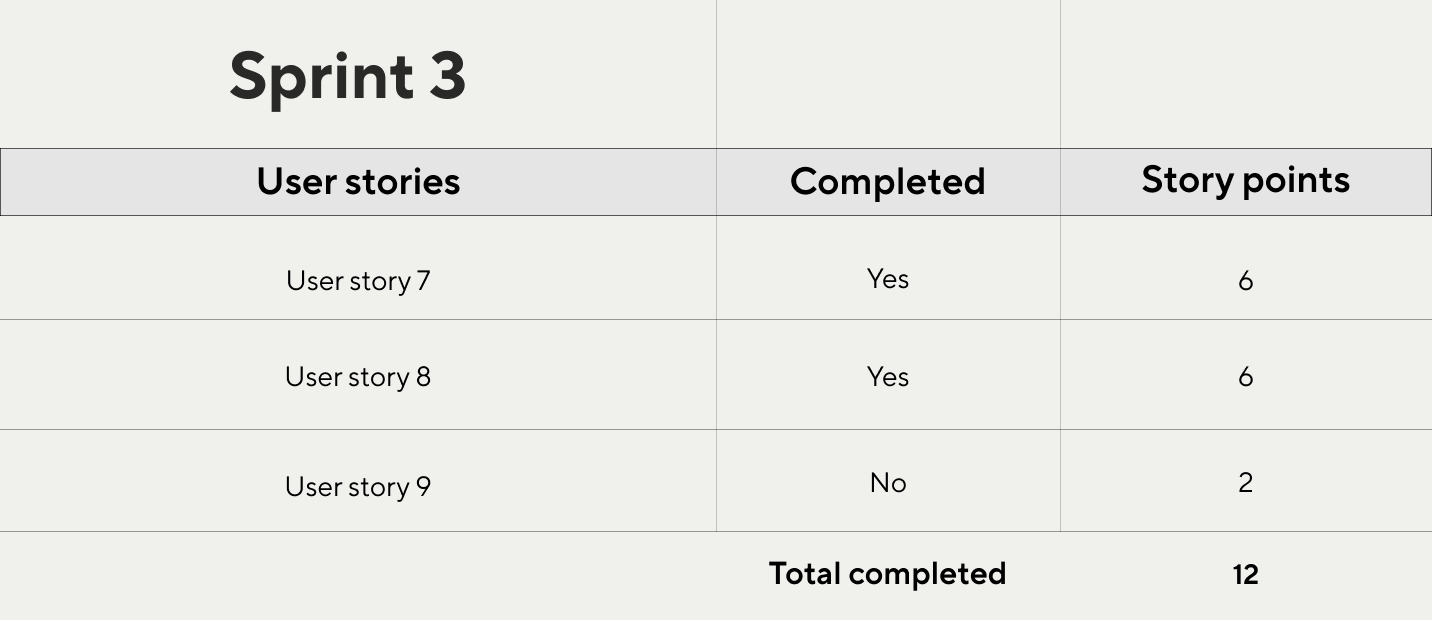
    Next, the velocity of the first sprint is calculated by getting the total story points for all completed user stories:
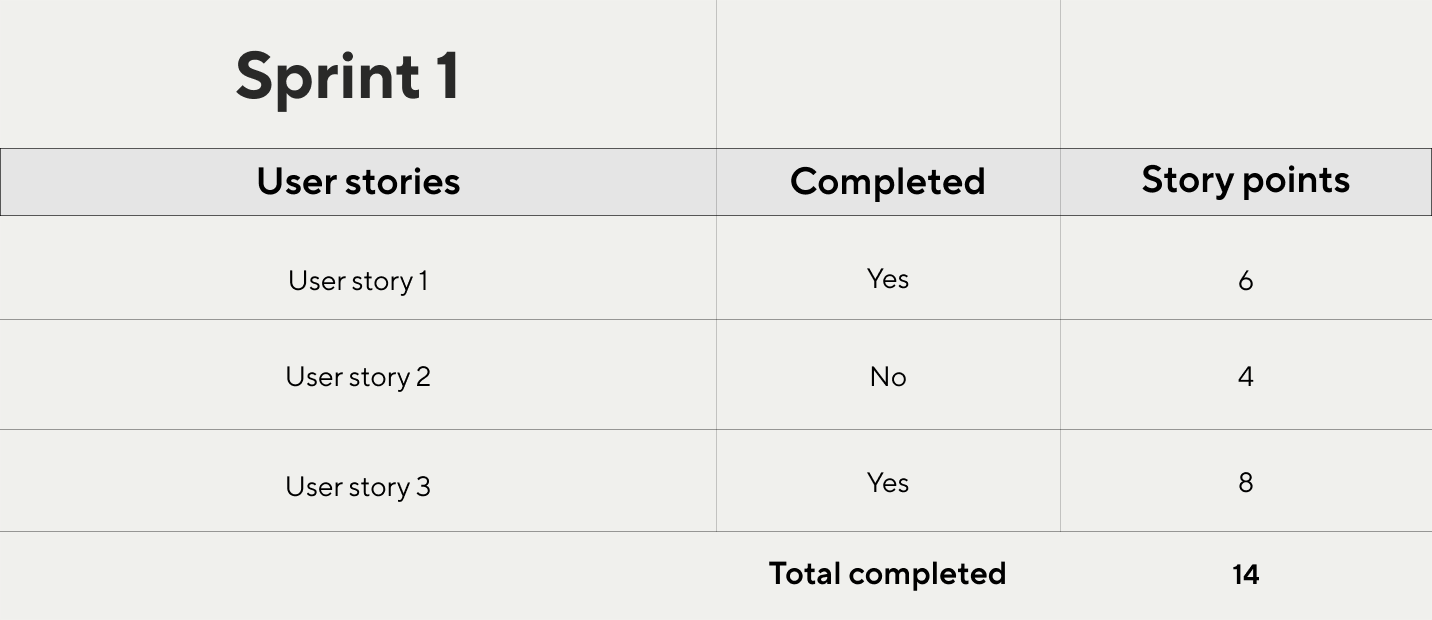
    Table showing sprint 1 story points completed to calculate Scrum velocity.

    Sprint 1 Scrum velocity calculation

    This will be the same again for the following two sprints:
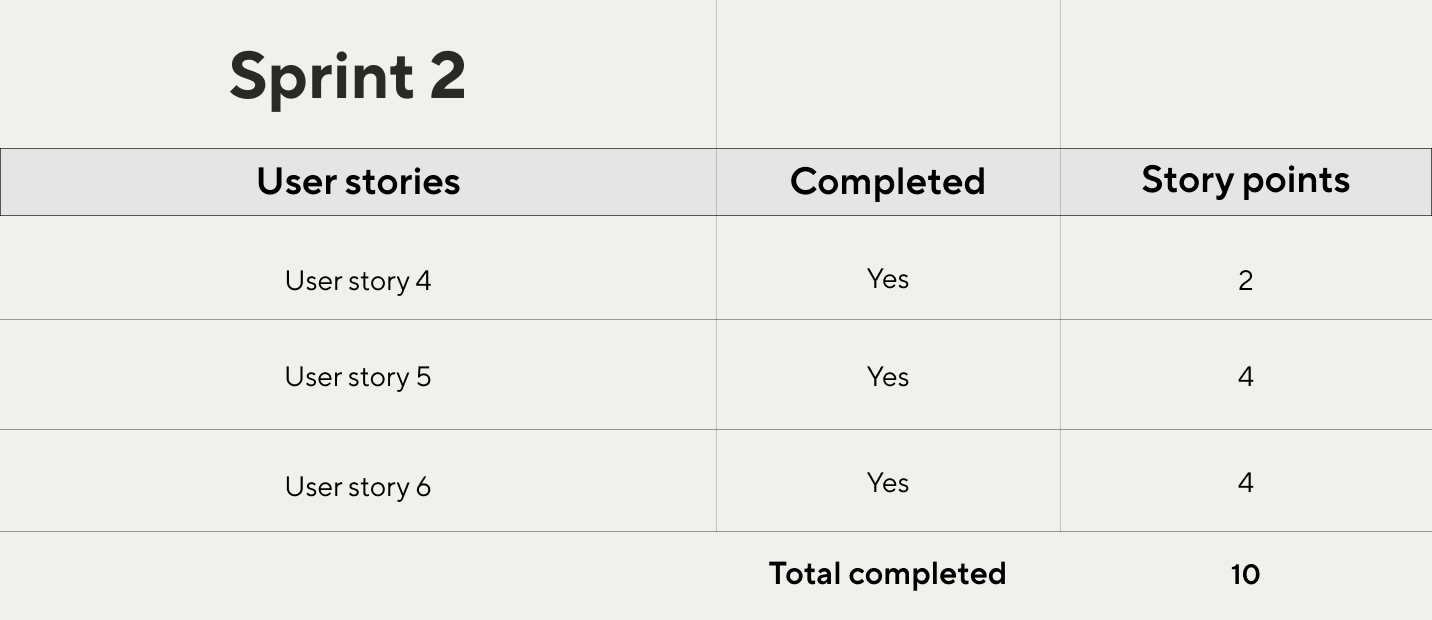
    Table listing sprint 2 story points completed to measure Scrum velocity.

    Sprint 2 Scrum velocity calculation

    Table showing sprint 3 story points completed to track changes in Scrum velocity.

    Sprint 3 Scrum velocity calculation

    Three sprints give the Scrum master enough data to calculate sprint velocity, which is calculated by taking the average story points of completed user stories for the last three sprints:
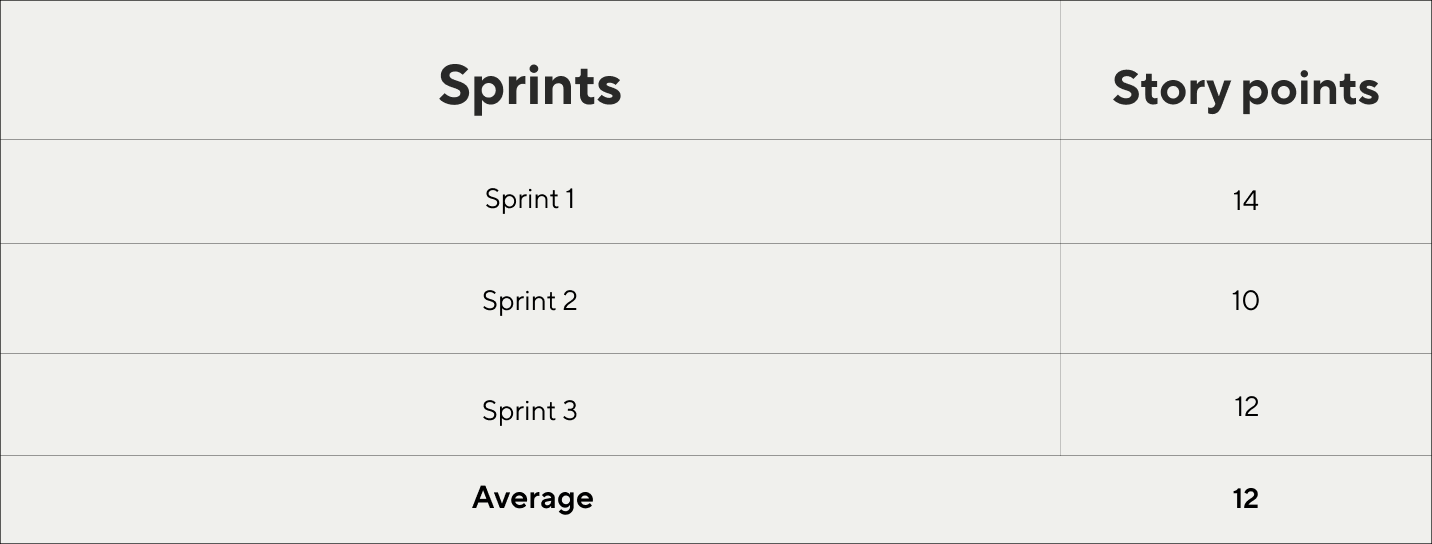
    Bar chart comparing story-point output across sprints to illustrate Scrum velocity trends.

    Scrum velocity trend across sprints

    If a Scrum development team recognizes that they can handle 12 story points on average, estimation during sprint planning becomes easier.

    Velocity charts allow teams to quickly understand discrepancies between committed and delivered work.

    In short, to calculate Scrum velocity, you should:

    1. Track the total number of story points completed in each sprint.
    2. Add those totals together.
    3. Divide the result by the number of sprints measured (typically three to five).
    4. Use that average to estimate future sprint capacity.

    Scrum velocity naturally fluctuates from sprint to sprint — and that’s normal. Changes in team size, scope, or external factors can affect how much work gets completed. The key isn’t to eliminate fluctuations altogether, but to understand what’s causing them so teams can plan more accurately and maintain steady delivery over time.

    Many factors can influence velocity, including:

    • Lack of engagement by team members and stakeholders
    • System outages or technical issues
    • Team member absences

    Lack of engagement by team members or stakeholders

    When team members or stakeholders lose engagement, productivity and collaboration suffer. Missing input from product owners or inconsistent participation in sprint ceremonies can create unclear priorities and wasted effort. Maintaining open communication, ensuring every team member understands sprint goals, and promoting ownership of outcomes all help stabilize velocity.

    How Wrike can help: Centralized communication in Wrike, including shared boards, @mentions, and live task updates, helps keep stakeholders engaged and aligned, reducing confusion that can negatively impact velocity.

    System outages or technical Issues

    Unexpected downtime from tools, servers, or development environments can stall progress mid-sprint. Even brief outages can ripple through a team’s schedule, leading to fewer completed story points. 

    Proactive monitoring and automated alerts can help minimize downtime and prevent velocity dips caused by technical disruptions.

    Team member absences

    Vacations, illnesses, or unplanned absences reduce capacity and directly affect sprint output. Even losing one key contributor for part of a sprint can have a measurable impact on velocity. Teams can mitigate this by tracking capacity during sprint planning, redistributing tasks early, and maintaining clear documentation so others can step in when needed.

    How Wrike can help: With Wrike’s task histories and contextual documentation, teams can redistribute work quickly and keep velocity stable when someone is unavailable.

    How to improve Scrum velocity

    To improve Scrum velocity, teams must first understand the factors that affect it. Scrum velocity is influenced by team experience, sprint scope stability, backlog clarity, and communication flow.

    Here are the key factors to consider when improving Scrum velocity:

    • Reduce sprint interruptions
    • Refine the product backlog regularly
    • Improve communication and collaboration
    • Focus on estimation accuracy
    • Enhance technical practices
    • Conduct effective sprint retrospectives
    • Use velocity as a planning guide, not a performance metric

    Reduce sprint interruptions

    Unplanned work is one of the biggest threats to consistent velocity. Last-minute requests, shifting priorities, or production issues can derail even the best sprint plans.

    How to fix it: Create a buffer in sprint planning for high-priority interruptions and use clear prioritization rules to protect focus. Wrike’s real-time task tracking tools help teams visualize capacity so interruptions are managed, not chaotic.

    Refine the product backlog regularly

    A well-prepared backlog makes estimating and completing work easier. Poorly defined stories or outdated priorities often cause slowdowns during sprint execution.

    How to fix it: Wrike’s custom fields, prioritization tags, and backlog-refinement views help product owners keep stories clear, current, and easy to estimate.

    Improve communication and collaboration

    Velocity suffers when teams work in silos or blockers go unreported. Agile thrives on transparency, so effective communication directly improves throughput.

    How to fix it: Hold concise daily stand-ups, encourage open discussion of obstacles, and centralize updates in one workspace. Wrike’s shared boards and comments can help consolidate updates and reduce delays caused by scattered communication.

    Focus on estimation accuracy

    Inconsistent estimation leads to unstable velocity trends. Overestimating makes sprints look slow, while underestimating can burn out the team.

    How to fix it: Historical story point data stored in Wrike helps teams compare estimated vs. actual complexity and refine their velocity over time.

    Enhance technical practices

    Technical debt, outdated tooling, and manual processes can quietly drag down sprint performance. Investing in automation and clean-code practices pays off through higher, more predictable velocity.

    How to fix it: Automate testing, code reviews, and deployment steps where possible. Use workflow automation features to streamline repetitive tasks, so developers can focus on delivery.

    Conduct effective sprint retrospectives

    Scrum velocity improves when teams learn from every sprint. Retrospectives help identify what’s working and what needs to change before the next iteration.

    How to fix it: Track recurring themes across retrospectives and assign clear action items to address them. Use shared templates or reports to document insights and monitor progress toward improvement goals.

    Use velocity as a planning guide, not a performance metric

    Velocity is best used for forecasting and capacity planning, not as a measure of individual performance. Treating it as a scoreboard creates pressure and leads to inflated estimates.

    How to fix it: Emphasize that velocity reflects team predictability, not speed. Use velocity trends to balance workload and ensure sustainable delivery. Dashboards that visualize long-term velocity trends help reinforce this team-oriented view.

    From tracking to improving: Strengthen Scrum velocity with Wrike

    Scrum velocity isn’t about speed; it’s about consistency, collaboration, and continuous improvement. By understanding what drives fluctuations, applying clear estimation practices, and refining team processes, Scrum teams can achieve more predictable and efficient delivery.

    With a platform like Wrike, teams can take that improvement even further. Real-time dashboards, shared backlogs, and automated reporting make it easy to visualize velocity trends, adjust workloads, and keep every sprint on track. When everyone works from a single source of truth, maintaining steady velocity becomes less about managing uncertainty and more about delivering lasting results.

    Sprint velocity measures how much work the team completes in a sprint, expressed in story points. A burndown chart, on the other hand, visualizes the remaining work as the sprint progresses. Velocity is a metric, while burndown charts are a visualization tool used to track that metric over time.

    You can’t accurately calculate Scrum velocity before completing at least one sprint. However, teams can make an initial estimate by referencing past projects or similar teams. After the first few sprints, refine the estimate using actual story-point averages to set realistic baselines.

    Fluctuations in Scrum velocity often point to changes in team composition, task complexity, or sprint interruptions. Tracking these variations over multiple sprints helps teams identify patterns and address root causes — for example, improving backlog refinement or reducing external dependencies.

    There’s no universal “good” Scrum velocity. The goal is consistency, not speed. A stable velocity, one that remains steady over several sprints, indicates that the team’s estimation, process, and scope management are working effectively.

    • Product
      • Product tour
      • Pricing
      • Templates
      • Apps & Integrations
      • Task Management
      • Gantt Charts
      • Wrike Status
      • Security
      • Wrike API
      • Compare
      • Features
    • Solutions
      • Enterprise
      • Marketing
      • Creative
      • Project Management
      • Product Development
      • Business Operations
      • Professional Services
      • IT Management
      • Students
      • All Teams
      • All Use Cases
    • Resources
      • Help Center
      • Community
      • Blog
      • Webinars
      • Interactive Training
      • Support Packages
      • Find a Reseller
      • Google Project Management Tools
      • CA Notice at Collection
    • Company
      • About Us
      • Leadership
      • Careers
      • Our Customers
      • Events
      • Newsroom
      • Partner Program
      • Collaborate - User Conference
      • Wrike Engineering
      • Contact Us
    • Guides
      • Project Management Guide
      • Professional Services Guide
      • Workflow Guide
      • Kanban Guide
      • Agile Guide
      • Scrum Guide
      • Marketing Project Management Guide
      • Collaborative Work Management Guide
      • Digital Marketing Guide
      • Go-to-Market Guide
      • Remote Work Guide
      • Return to Work Guide
      • Product Management Guide
      • Goal Setting Guide

    Subscribe to Wrike news and updates

    Stay informed with the latest news and updates by subscribing to our marketing emails.

    AICPA logo.Footer icon BSI.Footer icon CSA star.

    Enterprise-Grade Security.
    Uptime Over 99.9%

    ©2006-2025 Wrike, Inc. All rights reserved. Patented. Privacy Policy. Terms of Service. Cookie Preferences. Your Privacy Choices

    Wrike logo