
Leading Collective Intelligence

Andrew Filev , Thursday, February 12, 2009
It’s been a long time since I wrote my last post. The end of the last year and beginning of this one were very busy and exciting. I was participating in several industry conferences, meeting new people, getting new ideas from them and picking up some interesting topics. One of them is leadership in project management. The development of collective intelligence and collaborative Web 2.0 solutions gives this topic a whole new angle. I thought of writing a couple of posts, reflecting on my perception of leadership in the age of collective intelligence. So here’s the first one.
Every now and then I come across articles on the power of the collective brain. Analysts, bloggers, business consultants, and professors in business schools keep talking about the value of empowering your team and unleashing collective intelligence.

A growing number of people are discovering through their own experience that wholes are indeed far more than the sum of their parts. If individuals are coming together with a shared intention in a conducive environment, then the result of their collective work will far transcend the work of the individuals involved.

I support Andrew McAfee’s view that leveraging this collective brain can help an organization to deal with many financial challenges. McAfee suggests that the answers to a company's challenges reside in the minds of the employees dispersed across the organization. Each particular individual may not have the best answer, but technology can be used to pull together the bits and pieces of employees' knowledge to find the right solutions.

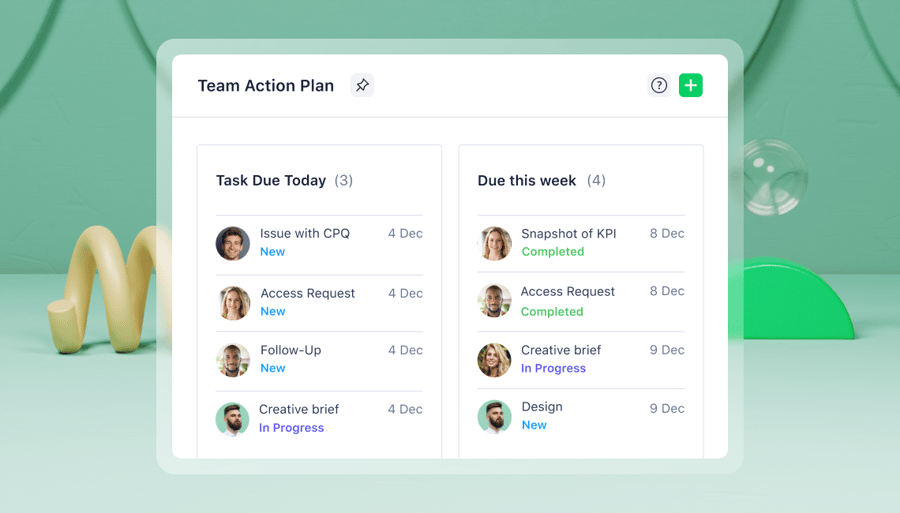
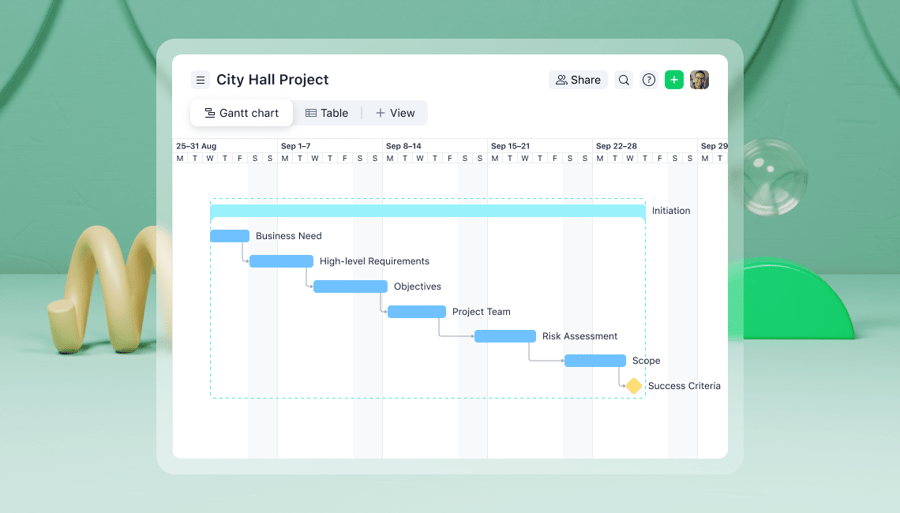
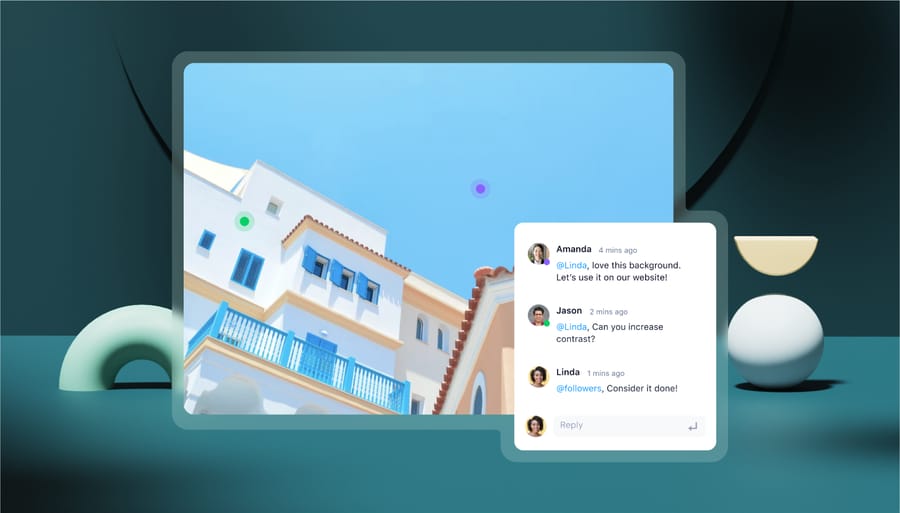
In one of its reports, Forrester indicated that Web 2.0 is being broadly and rapidly brought into enterprises to enhance performance in different spheres. In this respect, project management is perhaps the most popular field for adopting a new technology. Indeed, various Project Management 2.0 technologies do a great job in giving team members more opportunities to communicate, share files, update each other on the latest project news, and work together in real time despite time differences and vast distances. Project Management 2.0 tools become a system that lets members contribute and modify content in a ‘freeform’ manner—with a minimum of imposed structure in the form of workflows, decision right allocations, interdependencies and data formats. The best tools in this field contain mechanisms to let the structure emerge over time. Such mechanisms include linking, tagging, building views and hierarchies. Using a project management system as an emergent social information environment, the team becomes more powerful.

However, there are many concerns on the project managers’ side that this freeform team collaboration can turn into chaos. Does the growth of the collective power of a team decrease the power of a project manager?

To find an answer to this question, we need to take a look at the team itself. With the next-generation technologies, people have more freedom of collaboration and access to more information. Yet, having more information, more new ideas and more choices can puzzle people. So people start looking for somebody to guide their actions and decisions. They are looking for project leaders. In the contemporary reality of growing collective power, teams need leaders more than ever. So collective intelligence and adoption of Project Management 2.0 tools and practices do not eliminate the need for project leaders.

However, it looks like project leaders of the collaborative age cannot follow the old-fashioned command-and-control pattern anymore. Many experts agree that, project leadership is undergoing a radical redefinition. For example, Edward Marshall, president of The Marshall Group, Inc., writes: “We are at a turning point in organizational and leadership history. The 20th century command-and-control approach, which worked quite well in the manufacturing age, no longer works in the 21st century information age, which is global, high-tech and incredibly competitive. It’s time to catch up to current realities.” I couldn’t agree more. Project Management 2.0 transforms traditional perception of leadership. Well, what does the new Project 2.0 leader look like?

Seth Godin addresses this question in his latest book “Tribes: We Need You to Lead Us.” “Tribes”, according to Seth, are groups of people with a shared interest and a way to communicate. Web 2.0 technologies facilitate the formation of such tribes. However, to be really effective, tribes need leaders. Leadership, as Seth puts it, “is about creating change you believe in.” What I like about this rather laconic definition is that it highlights the two important things. Leaders should:

1.    “create change”, i.e. improve the existing state of things
2.    “believe in” this change, i.e. they should join accountability with passion.

And what’s the leader’s main role? According to Seth, it’s to “increase the effectiveness of the tribe and its members” by:

•    transforming the shared interest into a passionate goal and desire for change,
•    providing tools to allow members to tighten their communications, and
•    leveraging the tribe to allow it to grow and gain new members


Seth speaks about tribes that are formed on the web, not in the corporate environment. Still I think that this leadership concept can be applied to Project Management 2.0. Indeed, the Project 2.0 leader’s role is to motivate his team and make the team members more productive, in order to complete the project on time and on budget.

He can do it by:
•    setting a goal that his team will be aspiring to and make this goal clear to every team member
•    providing the tools that will make the team’s collaboration most efficient, and
•    leveraging his team’s collective brain and capabilities

Let me underline that this type of leadership is more about empowering a team by helping it to collaborate than about telling people what they should do. Also, the emphasis is more about the effectiveness of the people on the team level in achieving the goal. While the leader is the one who has accountability and personal commitment, it’s really the team that is the focus.

In many ways, this echoes the concepts of “Level 5 Leadership” as described in the book, "Good to Great" by Jim Collins. In addition, the point about setting a goal is very much aligned with Collins’ BHAG concept. In my next post, I’ll explore this concept in more detail and will try to present it from Project Management 2.0 point of view.

Comments (2)

  • Leonid Belyaev, Sunday, 17 May, 2009
    Andrew, I truly believe that E2.0 technologies will change dramatically the way organizations operate. I'd be interested to know your experience in implementing E2.0 and PM2.0 techniques in your organization and challenges faced / benefits yielded
  • Andrew Filev, Sunday, 17 May, 2009
    Leonid,

    Thanks a lot for your interest. This blog is all about E2.0 and PM2.0, though, I try to avoid using personal examples, because it might look like self-advertising or boasting. Inside of Wrike we live and breathe what we preach. For example, our product management process is highly collaborative inside of Wrike, and heavily relies on collective intelligence of all our users that we harvest in our customer service processes.

    Speaking of customer service processes, your comment has just woke up a dormant idea that I wanted to put in writing for a couple of days. Many companies now think that "social" part of Enterprise 2.0 is all about trendy tools like Facebook and Twitter. It's not. For example, if businesses will take social media strategy consultants' advice and apply it from a small touch point like a corporate Twitter account to mass-scale everyday operations like customer service, they will derive tremendous value. This is in no way to discriminate Twitter or social media strategists' advices. Twitter is a nice tool, and consultants' advices are smart. So smart, that they deserve an adoption outside of a Twitter account run by a couple of employees and inside daily operations carried on by hundreds and in some cases thousands of employees.

Post a comment

Name (required)
Email (required)
Notify me of follow-up comments via email
How much is 2+2?
If you see this, leave this form field blank and invest in CSS support.
rss

Subscribe via RSS or

Andrew Filev

Andrew Filev is an experienced project manager and a successful entrepreneur. He has been managing software teams since 2001 with the help of new-generation collaboration and management applications. The Project Management 2.0 blog reflects his views on changes going on in contemporary project management, thanks to the influence of collaborative web-based technologies. More >>

twitter andrewsthoughts